Requests get lost or delayed
Shared inboxes make it difficult to see what is new, who owns it, and what needs attention first.
TechnoSignage combined AI-assisted discovery, rapid prototyping, software engineering, workflow automation, and human review to turn a complex service problem into OmniTicket—an adaptable solution for customers, agents, managers, and administrators.
OmniTicket shows how TechnoSignage approaches organisational AI: diagnose a valuable workflow, define where intelligence can help, establish human controls, and engineer the surrounding application that makes the capability useful in daily work.
AI accelerated the path from business problem to working software. It helped structure requirements, explore interfaces and workflows, assist repetitive engineering tasks, propose test scenarios, and support voice-assisted composition. TechnoSignage’s consultants and engineers retained responsibility for the service model, architecture, security, validation, and release decisions.
When requests arrive through different channels and teams rely on manual coordination, the problem is bigger than a slow inbox. Customers lose confidence, agents repeat work, managers lack visibility, and growth adds complexity instead of capacity.
Shared inboxes make it difficult to see what is new, who owns it, and what needs attention first.
Without consistent routing and escalation paths, work stalls between people, teams, or departments.
Responses vary when agents lack shared templates, guidance, history, and repeatable service processes.
Disconnected tools hide workload, priority cases, service trends, and opportunities to improve.
Manual classification, assignment, follow-up, and common replies reduce time for higher-value support.
Supporting more departments, applications, or customer groups often creates more disconnected processes.
OmniTicket connects the customer experience to the operating controls behind it. Every request moves through the same traceable environment—from first contact and assignment to collaboration, resolution, and insight.
Submit and track requests, review conversation history, add replies and documents, and find approved answers independently.
See assigned work, priority items, recent updates, and organisation-wide demand without switching between tools.
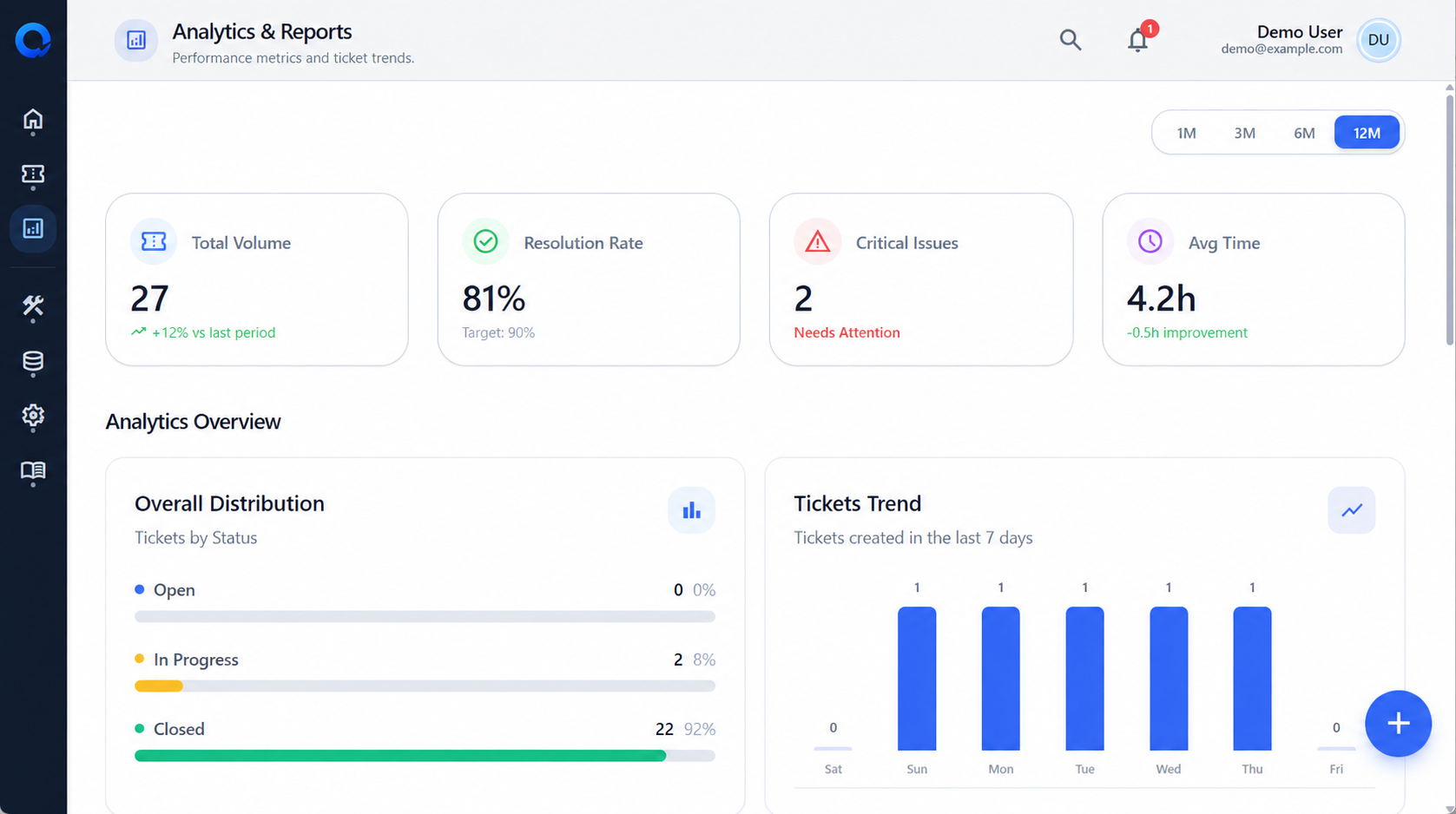
Monitor volumes, trends, status, priorities, escalations, resolution performance, and team activity.
Configure forms, workflows, fields, service categories, communications, users, and access as operations evolve.
One workspace to manage requests, automate repetitive work, and turn service activity into insight.
Everything stays structured, searchable, and accountable from intake to resolution.
Route, classify, notify, and escalate without unnecessary manual intervention.
Run several teams, products, or business units from one unified workspace.
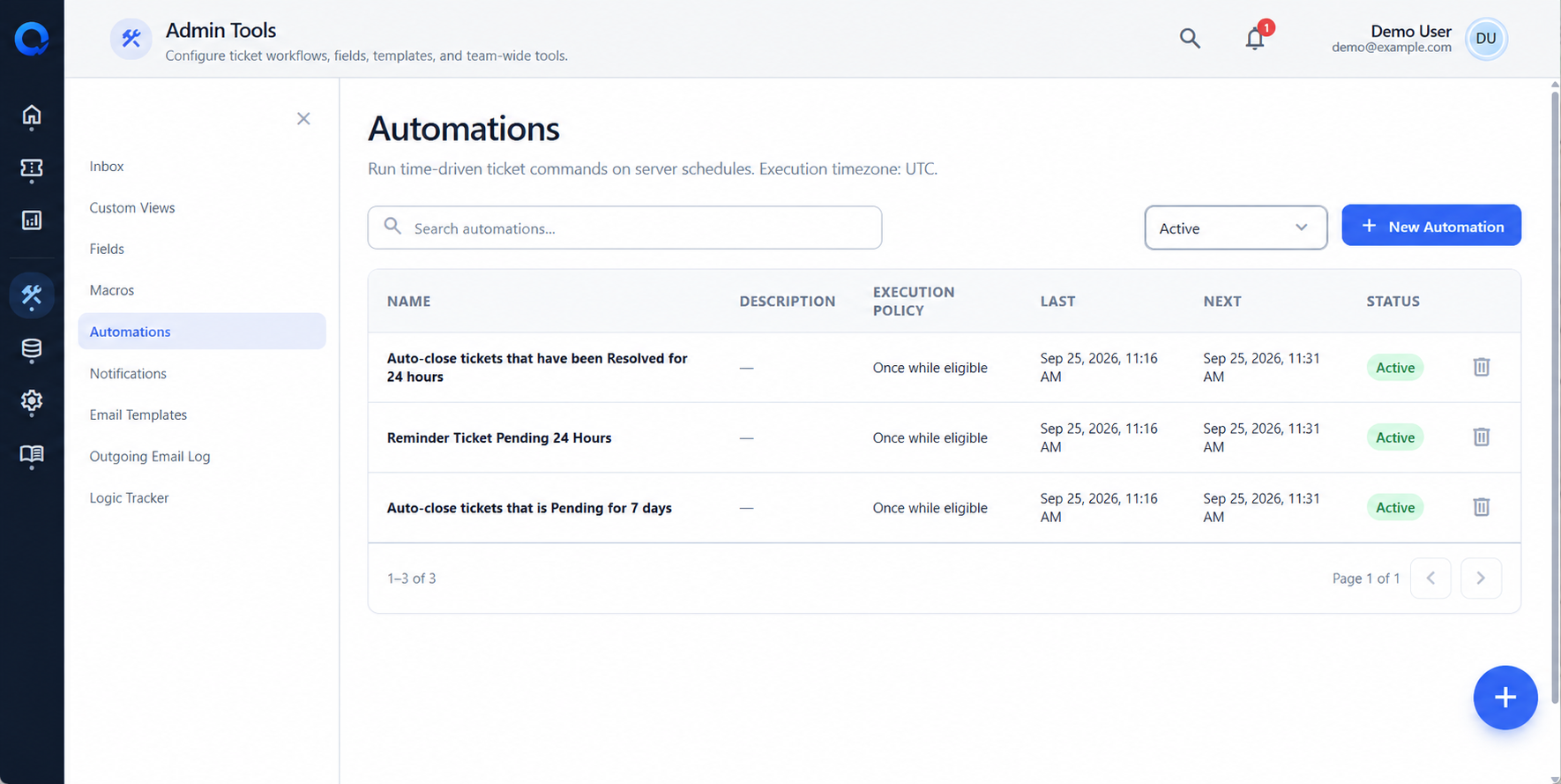
Help customers and teams get the right information, first time.
Give every role appropriate access with a complete activity and conversation history.
See demand, workload, escalations, trends, and resolution performance.
The engagement joined business analysis, experience design, AI-assisted delivery, application engineering, workflow controls, and operational validation. AI accelerated useful work; it did not replace accountability.
AI helped organise user roles, service scenarios, workflow rules, and edge cases into clearer stories the delivery team could validate with business stakeholders.
Rapid interface and workflow exploration made it easier to compare approaches, refine forms and dashboards, and expose unclear decisions earlier.
AI assisted with scaffolding, repetitive implementation patterns, refactoring, and technical documentation, leaving the team more time for business logic, integration, and user experience.
AI helped propose test scenarios, unusual user journeys, failure conditions, and accessibility checks. Engineers still verified behaviour and made the final release decisions.
The page separates what is included from what remains an opportunity. Future capabilities would only move forward after validating data quality, business value, risk, and human oversight.
Users can capture detailed responses more naturally, then review and edit the text before it is submitted.
Suggest a service, category, or priority so agents spend less time organising incoming work.
Condense long conversation histories into a clear handover or management update.
Surface relevant approved guidance for customers or agents at the point of need.
Help leaders identify recurring issues, emerging themes, and gaps in service content or process.
Capabilities evidenced in the solution and delivery process.
Potential use cases—not presented as delivered features.
The method is designed for organisations that know AI matters but need help choosing a viable starting point, controlling risk, and integrating the result into the way people already work.
Map the affected users, decisions, delays, available data, constraints, and measurable outcome.
Review data quality, integrations, permissions, human oversight, security, and operational ownership.
Test the riskiest workflow, model, data, or interaction assumption before committing to a full build.
Build the application, automation, interfaces, access controls, and connections required for daily use.
Test with users, define acceptance measures, support rollout, and learn from operating evidence.
No approved before-and-after performance figures are available for publication. The proof therefore stays with observable scope, working capabilities, and the delivery controls shown on this page.
This is a product and delivery case study. It does not claim client performance improvements that have not been independently approved for publication.
OmniTicket is designed to create practical operational gains: fewer missed requests, faster handling, more consistent service, and a clearer view of where teams need support. The focus is sustainable improvement rather than unverified headline metrics.
Ownership, status, priority, and escalation make outstanding work visible and actionable.
Better information capture, automated routing, and reusable actions remove avoidable delays.
Agents spend less time organising work and more time resolving the issues that need judgment.
Shared processes, templates, and knowledge help customers receive dependable service across teams.
Operational dashboards reveal demand, workload, performance, and emerging service gaps.
Multiple services and applications can grow inside one environment without multiplying disconnected tools.
Clear answers about scope, governance, adaptation, and the first step.
AI assisted with requirements structuring, interface and workflow exploration, repetitive engineering patterns, documentation, and test-scenario generation. It also supports voice-assisted composition in the solution. TechnoSignage’s consultants and engineers retained responsibility for business decisions, architecture, security, testing, and release approval.
Voice-assisted composition is the included operational AI use case shown here. Users can capture a detailed response naturally, then review and edit the text before submitting it. Classification, summarisation, knowledge suggestions, and demand-pattern detection are identified as opportunities rather than delivered features.
Controls begin before implementation: define permitted data, user access, acceptable outputs, review points, escalation paths, and measurable acceptance criteria. Focused prototypes test uncertainty early, while people remain accountable for high-impact decisions and production release.
Yes. The platform is an example, not a fixed package. TechnoSignage starts with the organisation’s workflows, systems, users, data, risks, and desired outcomes, then recommends whether AI, deterministic automation, analytics, or a combination is appropriate.
We clarify the business problem, affected teams, current process, available data, existing systems, risk constraints, and desired outcome. The aim is to identify a practical first use case and the evidence needed before broader investment.
Bring us the process, users, systems, constraints, and outcome you want to improve. We will help identify the strongest use case, expose readiness gaps, define the right controls, and shape a credible path from prototype to production.