One guide in a six-part series for business teams.
Finance work combines documents that vary in wording and layout with calculations and approvals that must follow precise rules. AI can help read, organise, and explain the inputs. The accounting system remains responsible for balances, posting logic, and the controlled record of transactions.
For UAE finance teams, useful pilots often involve documents from several entities, supplier formats, VAT-related fields, Arabic and English content, and established approval limits. The accounting system should remain the source of truth, with finance reviewers responsible for exceptions and final postings.
The following scenarios illustrate workflows you could scope and test. They are not claims of completed TechnoSignage client projects or guaranteed improvements.
Where AI can help Finance
- Invoice intake: prepare a draft accounting record
- Expense claims: assemble a review pack
- Reconciliation support: investigate unmatched descriptions
- Collections: prepare a factual follow-up
- Management reporting: draft commentary over verified figures
Invoice intake: prepare a draft accounting record
Accounts receives supplier PDFs with different layouts. Staff copy invoice numbers, dates, line items, and totals before checking purchase orders.
- How the workflow improves
- AI proposes fields with document references. Fixed checks validate arithmetic, required fields, supplier records, and duplicates. Unclear values enter a review queue before any record is posted.
- A realistic example
- An invoice has a clear total but an unreadable purchase-order number. The draft preserves the total and marks the reference for review rather than inventing one.
- Data and systems needed
- Connect the approved invoice inbox, document store, supplier master, purchase orders, and accounting import or API. Keep document identifiers attached to the draft.
- Who reviews and approves
- Accounts confirms extracted fields and posting. Payment approval remains a separate controlled process. A supplier bank-detail change requires the existing verification process.
Expense claims: assemble a review pack
Employees submit receipts and short explanations that do not consistently identify the business purpose, project, or cost centre.
- How the workflow improves
- AI extracts receipt details and organises the explanation. Rules check required fields and policy thresholds. The assistant asks for missing information and prepares the supporting pack.
- A realistic example
- A hotel receipt has no client or trip reference. The system asks the employee to supply the business purpose and shows the reviewer which information remains unverified.
- Data and systems needed
- Use the expense platform, receipt store, approved policy, employee identity, and project codes. Currency and tax calculations come from approved accounting rules.
- Who reviews and approves
- The employee confirms the claim and the authorised approver decides reimbursement. AI must not infer sensitive personal circumstances or approve an exception from a narrative alone.
Reconciliation support: investigate unmatched descriptions
A bank transaction and a customer record use different payment references. Finance staff read descriptions and search supporting correspondence to investigate the unmatched item.
- How the workflow improves
- AI suggests possible records based on supplied references and explains the evidence. Deterministic amount and date checks narrow candidates. Ambiguous matches remain unresolved.
- A realistic example
- Two invoices have the same amount. The assistant identifies both and points to the payment email that may distinguish them, rather than silently choosing a match.
- Data and systems needed
- Use controlled bank exports, receivables records, and authorised correspondence. Preserve the original references and an audit trail of the proposed match.
- Who reviews and approves
- A finance reviewer confirms reconciliation. AI does not change ledger balances or mark an uncertain match as final. Test duplicate amounts, partial payments, and missing references.
Collections: prepare a factual follow-up
Credit control needs to follow up overdue invoices while accounting for disputes, promised payment dates, and recent customer correspondence.
- How the workflow improves
- AI summarises the account history and drafts a follow-up using verified outstanding balances. Business rules determine the follow-up schedule and escalation path.
- A realistic example
- The draft recognises that the customer has disputed one invoice and asks for an update on the undisputed balance. It does not demand payment for a balance already cleared.
- Data and systems needed
- Connect current receivables, dispute records, CRM notes, and approved communication templates. Retrieve balances at the time the draft is prepared.
- Who reviews and approves
- Credit control checks the message and authorises sending. Credit limits, settlement terms, and collection escalation remain authorised business decisions.
Management reporting: draft commentary over verified figures
Finance prepares monthly commentary from validated reports and department explanations. Combining the figures and notes into a readable briefing takes time.
- How the workflow improves
- AI drafts commentary from the approved reporting pack, cites figures, and separates documented causes from questions needing investigation. BI and the accounting system supply calculations.
- A realistic example
- Revenue is below plan, but the inputs do not establish why. The briefing states the variance and asks for supporting explanation instead of inventing a market cause.
- Data and systems needed
- Use agreed KPI definitions, approved reports, department notes, and the reporting calendar. Control versions so commentary matches the signed-off figures.
- Who reviews and approves
- Finance checks every figure and interpretation before circulation. Forecasts, accounting judgements, and commitments require their normal review and approval.
Choose a manageable first pilot
Choose one invoice family and produce a draft export for an accounts reviewer. Include unfamiliar layouts, credit notes, duplicates, blurred scans, and missing purchase-order references. Keep posting and payments outside the first pilot until extraction, validation, and exception handling have been evaluated.
Measure the whole workflow
Measure field accuracy, exceptions found, reviewer corrections, total handling time, and failed exports. Compare processing plus checking time with the current workflow. Record results separately for clean digital invoices and poor scans so an average does not conceal difficult cases.
Common mistakes to avoid
A plausible supplier name or amount can still be wrong. Source documents and validation results need to remain visible. Do not treat an AI confidence value as proof that an invoice is genuine, a payment is authorised, or accounting treatment is correct.
Prepare for a department assessment
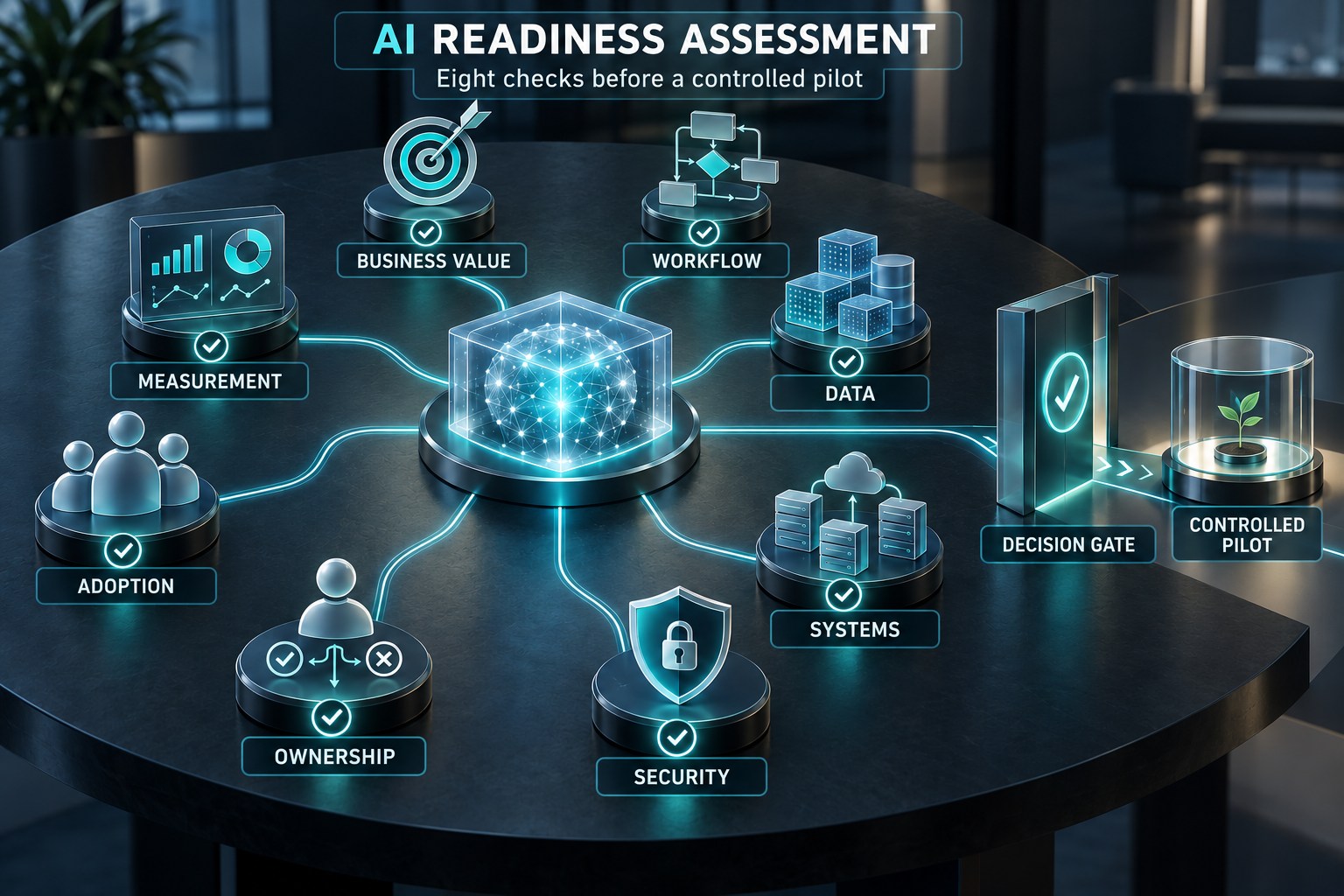
- Name the process owner, users, and reviewer.
- Describe one repeated task and its current volume and handling time.
- Gather authorised examples of normal work, exceptions, and correct outputs.
- Identify the source systems, access restrictions, and approved integration methods.
- Agree the actions that require confirmation and the fallback when information is missing.
- Define the evidence needed to continue, change direction, or stop.
Explore an AI opportunity and readiness assessment or discuss your Finance workflow with TechnoSignage.
Continue exploring practical AI
Explore more AI implementation guides for UAE business teams.
Implementation references
For one implementation example, Microsoft documents invoice extraction in Power Automate with AI Builder. Available features and integration requirements should be checked for the chosen platform.
The NIST AI Risk Management Framework provides a voluntary reference for assessing trustworthiness and managing AI risks. The scenarios above are editorial proposals, not a prescribed platform architecture.